
Most M&A deals fail, not because the strategy was wrong, but because the advisory was. Studies consistently show that between 70% and 90% of mergers underperform their projected value. The variable that separates deals that close well from those that unravel in integration is the quality of the M&A advisory partner you select before the first term sheet is drafted.
For enterprise leaders navigating technology sector mergers and acquisitions, that choice carries even higher stakes. IP assets, complex infrastructure dependencies, regulatory exposure, and cultural integration across technical teams all demand an advisor who has been in exactly that room before.
This guide breaks down the five key considerations for choosing the right M&A advisory and adds the due diligence depth that most checklists leave out.
Schedule a Mergers and Acquisitions Call
Why the Right M&A Advisory Partner Changes Everything
Mergers and acquisitions are not transactional events; they are strategic inflection points. A single deal can redefine your market position, accelerate your digital transformation roadmap, or expose your organization to liabilities that take years to resolve.
The M&A advisory firm you engage becomes your proxy in negotiations, your guide through due diligence, and your integration architect once the deal closes. Choosing that partner based on fee structure or brand recognition alone is a strategic error that senior executives often recognize too late.
The right technology M&A advisory brings domain depth, operational discipline, and a verifiable record of closing deals that hold their value post integration. Here is how to evaluate one rigorously.
The 5 Key Considerations for Choosing the Right M&A Advisory
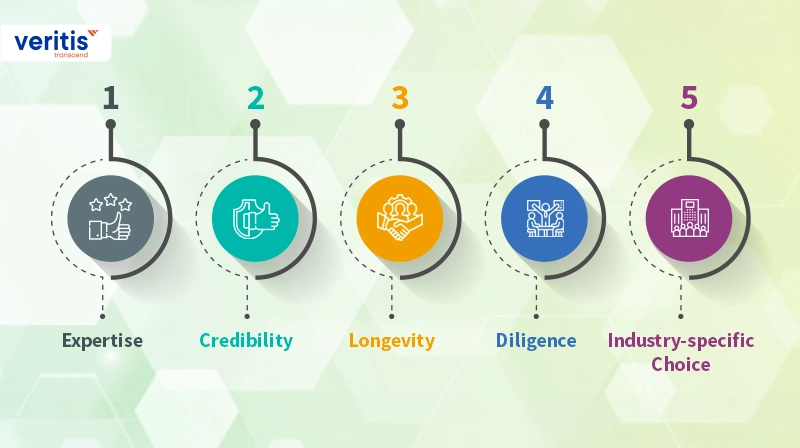
1) Expertise: Depth Across Every Dimension of the Deal
Expertise is the baseline requirement, but it is broader than most buyers appreciate at first. When you engage an M&A advisory firm, you are not hiring a single specialist. You are activating a team that must simultaneously navigate financials, organizational decision making, legal structures, intellectual property, technology architecture, and compliance frameworks.
Ask yourself: does this firm have demonstrable depth in each of these lanes?
What to evaluate:
- Financial and accounting acumen: Can the team accurately model synergies, stress test valuations, and identify off balance sheet liabilities?
- Legal and regulatory fluency: Do they understand the regulatory landscape of your specific sector, including data privacy, antitrust thresholds, and cross border compliance?
- Technology due diligence capability: In IT and technology M&A specifically, can they assess codebase quality, infrastructure debt, cybersecurity posture, and licensing risk?
- IP structuring: Can they present your copyrights, patents, and trademarks in a way that maximizes perceived value to an acquirer or merger partner?
An M&A advisor may come from accounting, investment banking, tax consulting, or operational management backgrounds. Each brings a different lens. For technology transactions, prioritize advisors who are currently active in your target industry; market dynamics shift quickly, and stale knowledge is a liability in negotiations.
2) Credibility: The Currency of Confidential Transactions
Every M&A transaction requires you to hand over your organization’s most sensitive assets: financial statements, IP portfolios, customer data, regulatory filings, and strategic roadmaps. Credibility is not a soft metric here; it is the foundational condition for a functioning deal.
A credible M&A advisory firm demonstrates integrity at every stage: client intake, non disclosure management, information exchange, negotiation conduct, final execution, and post merger integration. A lapse at any one of these stages can compromise deal value, expose your organization to litigation, or permanently damage relationships with the counterparty.
How to assess credibility:
- Request references from completed transactions of comparable size and complexity.
- Verify that the firm has handled IP sensitive deals in your sector before.
- Examine their data handling protocols; how do they manage and compartmentalize confidential information shared across both sides of a deal?
- Look for professional affiliations and certifications relevant to M&A advisory (FINRA registration, CPA, CFA, or sector specific credentials).
- Ask directly how they manage conflicts of interest when they represent multiple parties in adjacent markets.
Credibility is also reflected in how an advisor communicates when things get complicated, because in any deal of substance, they will.
3) Longevity: Market Tenure as a Proxy for Resilience
Longevity in M&A advisory is not simply a vanity metric; it is evidence of operational resilience across multiple market cycles. Firms that have navigated bull markets, recessions, regulatory shifts, and technology disruptions have accumulated the institutional knowledge that no textbook or new entrant can replicate.
As a working benchmark, prioritize M&A advisory firms with at least ten years of continuous market presence. That span typically encompasses at least one full economic cycle and multiple shifts in deal making norms.
What longevity signals:
- A documented track record of similar transactions completed over time, not just a pipeline of pending deals.
- Established relationships with acquirers, investors, legal counsel, and regulators in your sector.
- Accumulated best practices refined across dozens of engagements.
- Awareness of how current market conditions compare to prior cycles, and what that means for valuation and deal structure.
A newer firm may be energetic and cost competitive. But when a deal hits a structural complication, and most do, you want an advisor who has seen that specific scenario before and knows how to navigate it.
4) Diligence: Process Discipline That Protects Deal Value
Diligence in this context means something specific: the advisor’s own internal rigor in managing the Mergers & Acquisitions process from first engagement through post close integration. This is distinct from the due diligence they conduct on your behalf, though that too must be thorough.
A poorly managed M&A process, where steps are skipped, documentation lapses, or communication breaks down, is where deals fall apart or lose value at the final stage. Each phase of an M&A transaction is a building block. Missing or rushing through any single one creates discrepancies that surface either in negotiations or, worse, post close.
Markers of a diligent M&A advisory firm:
- They arrive at the first engagement with a structured project plan, not just a proposal deck.
- They maintain version controlled documentation across all deal phases.
- They establish regular, structured feedback cadences with stakeholders on both sides of the transaction.
- They surface risks proactively rather than waiting for their counterparty to identify them.
- They have a defined integration planning framework that begins before the deal closes, not after.
For technology transactions specifically, diligence must extend into technical architecture reviews, cybersecurity assessments, and software license audits, areas where undiscovered liabilities can materially affect post merger value. Firms offering technology assessment as part of their advisory scope bring a measurable advantage here.
5) Industry Specific Experience: The Insight Advantage
General M&A expertise is table stakes. Industry specific expertise is the differentiator that determines whether your advisor can identify opportunities where others see risk and protect you from risks that a generalist would miss entirely.
An M&A advisory firm with deep experience in your sector brings three compounding advantages:
Market intelligence: They understand current valuation norms, competitive dynamics, and which deal structures are gaining or losing traction in your space, intelligence that takes years of active involvement to accumulate.
Buyer and partner network: Industry specific advisors maintain relationships with likely acquirers, strategic investors, and integration partners in your vertical. This directly affects the number and quality of bids your transaction generates.
Risk pattern recognition: They have seen the failure modes specific to your industry, the integration challenges that technology acquisitions typically encounter, the regulatory tripwires in your sector, and the cultural friction points common in your type of organization. That pattern recognition is difficult to price but easy to value in hindsight.
For organizations managing complex technology portfolios, an advisor with experience in AI driven technology service and solutions can be particularly valuable in accurately representing and valuing emerging technology assets during negotiations, an area where generalist advisors frequently underperform.
Useful link: How Digital Transformation in Finance and Accounting is Reshaping Business Operations?
Additional Factors Worth Adding to Your M&A Advisory Checklist
The five considerations above form the core framework. Depending on your deal size, geography, and organizational complexity, consider adding the following to your evaluation criteria:
- Communication cadence and reporting style: Does the advisor communicate at the frequency and depth your leadership team requires?
- Fee structure transparency: Is the fee model retainer based, success fee based, or hybrid? Understand what incentives are embedded in that structure.
- Team continuity: Will the senior advisors who pitch your engagement actually work on it, or will the work be delegated to junior associates?
- Cross border capability: If your transaction has international dimensions, does the firm have the jurisdictional reach to manage it?
- Post merger integration support: Does the advisory relationship end at close, or does the firm offer structured integration management?
For a broader view of how to evaluate strategic technology partners beyond mergers and acquisitions consulting, the considerations in how to identify the right strategic technology advisory partner apply directly to this process.
How Veritis Approaches Technology M&A Advisory?
Veritis brings structured, end to end technology advisory services to organizations navigating the complexity of technology sector M&A. From pre deal technology assessment through integration planning and execution, the approach is built on the same five pillars outlined above: expertise, credibility, longevity, diligence, and industry specific depth.
Enterprise leaders who have engaged Veritis for M&A advisory consistently cite technical due diligence capability and post close integration support as the two areas where the engagement delivered the most measurable value.
For a visual summary of how smart advisory services accelerate technology M&A outcomes, see the Technology M&A with Smart Advisory Services infographic.
Strategic Takeaway
Choosing the right M&A advisory is not an administrative step in the deal process; it is one of the highest leverage decisions your leadership team will make before a transaction begins. The five considerations outlined here expertise, credibility, longevity, diligence, and industry specific experience provide a rigorous framework for that decision.
Apply them with the same scrutiny you would bring to any seven figure strategic investment. The quality of the advisory you select will not be shaped by whether the deal closes, but whether it delivers the value you modeled when you started.
Ready to explore how structured M&A Services can support your next technology transaction? Connect with Veritis’ M&A team to discuss your specific situation.