Digital advancements are changing industries everywhere, and organizations that lag may quickly lose their competitive edge. From mobile first customer experiences to AI powered workflows, technology adoption has become essential. But implementing digital tools alone isn’t enough. Without a structured review of strategies, processes, and technologies, investments can underperform or even fail.
At this point, there is a lack of deeper understanding of digital transformation strategy. Many still view Digital Transformation (DX) as a one-time task. However, it’s essential to recognize that DX is a continuous process that requires regular evaluation, strategic planning, and timely investments.
Performing timely digital transformation audits is as crucial as executing a well-defined digital strategy. By regularly assessing their digital landscape, organizations can stay aligned with technological advancements, identify areas of improvement, and adjust their strategies to ensure digital success. Digital transformation services can guide this ongoing journey, providing the expertise needed to implement and optimize digital strategies to keep pace with an ever-evolving digital landscape.
A digital transformation audit is the structured evaluation of an organization’s digital strategy, operations, technology stack, and processes. Conducted regularly, these audits ensure alignment with business objectives, identify gaps, and optimize performance. Organizations in Seattle and across the USA are increasingly turning to digital transformation audits to maximize ROI, improve efficiency, and mitigate risks.
Digitally Transform Your Business
What is a Digital Transformation Audit?
A Digital Transformation Audit is a comprehensive evaluation of an organization’s digital strategy, processes, technology, and governance. It’s not just about checking whether your company uses the latest tools; it’s about assessing how effectively your digital investments drive business outcomes, improve efficiency, and reduce risk. In today’s rapidly evolving business landscape, organizations that fail to audit their digital transformation efforts risk lagging behind competitors, wasting resources, and failing to achieve strategic goals.
Digital transformation is a continuous process that evolves over time rather than a single, completed effort. Companies across the U.S., are investing heavily in digital initiatives. According to Deloitte’s 2025 Tech Value Survey, organizations are increasingly focused on ensuring their technology investments deliver measurable business value and align with strategic goals.
Key aspects of a digital transformation audit include:
- Strategy Alignment: Ensuring digital initiatives align with business objectives.
- Technology Optimization: Evaluating whether current tools and platforms meet business needs efficiently.
- Process Efficiency: Reviewing workflows to identify bottlenecks and automation opportunities.
- Risk and Compliance Management: Assessing data governance, cybersecurity, and regulatory adherence.
- Continuous Improvement: Making digital transformation an ongoing process rather than a one time implementation.
Why Digital Transformation Audits Are Important?
Businesses often focus on implementing technology without measuring its impact. A digital transformation audit bridges this gap by highlighting inefficiencies, uncovering risks, and providing actionable insights.
Key benefits include:
- Maximized ROI: Audit results identify underperforming investments, ensuring that every dollar spent on technology drives value.
- Risk Management: Uncover potential vulnerabilities in IT systems, workflows, or compliance practices.
- Operational Efficiency: Streamline processes, optimize automation, and reduce redundancies.
- Competitive Edge: Benchmark against competitors in the Seattle and broader USA market to stay ahead.
5 Key Points to Consider for a Digital Transformation Audit
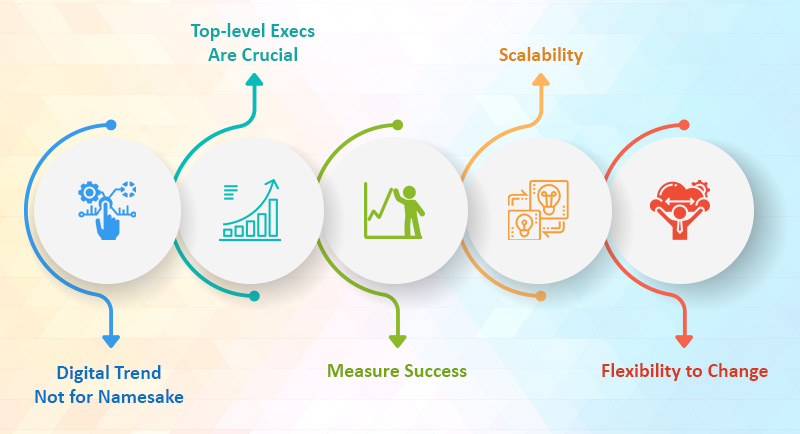
A thorough digital transformation audit is not just about checking boxes; it’s about evaluating critical areas that determine the success of your organization’s digital initiatives. Here are the five key points to consider before and during your audit:
1) Align Digital Strategy with Business Goals
Why it matters: Many digital initiatives fail because they don’t connect to the organization’s strategic objectives. A digital transformation audit must start by ensuring every project, tool, or process contributes to measurable business outcomes.
Key Actions:
- Map each digital initiative to specific business KPIs.
- Validate the relevance of your digital roadmap with organizational goals.
- Review adoption and performance metrics regularly.
2) Evaluate Technology Stack and Scalability
Why it matters: Technology is the backbone of digital transformation. Outdated or poorly integrated systems can slow down operations and reduce ROI.
Key Actions:
- Inventory all software, platforms, and tools in use.
- Assess integration between systems and identify redundancies.
- Evaluate scalability to support future growth and innovation.
3) Ensure Data Quality and Governance
Why it matters: Decisions based on inaccurate or ungoverned data can lead to inefficiencies, compliance issues, and lost opportunities.
Key Actions:
- Audit data accuracy, consistency, and accessibility.
- Check governance policies, access controls, and compliance with regulations (e.g., GDPR, CCPA).
- Establish processes for continuous data validation.
4) Optimize Processes and Automation
Why it matters: Digital initiatives must be complemented by efficient processes. Workflow bottlenecks and manual tasks can undermine the benefits of new technology.
Key Actions:
- Map key workflows to identify inefficiencies.
- Implement automation where possible (e.g., RPA, workflow tools).
- Continuously measure process performance and refine operations.
5) Prioritize Security and Compliance
Why it matters: As organizations digitize, cybersecurity risks and regulatory requirements increase. A robust audit must include an evaluation of risk management and compliance practices.
Key Actions:
- Conduct vulnerability assessments and penetration tests.
- Review identity and access management and encryption policies.
- Keep operations aligned with both industry regulations and company policies.
Digital Transformation Audit Checklist
A successful digital transformation audit is built on a structured checklist that ensures no critical aspect of your organization’s digital journey is overlooked. This checklist acts as a blueprint for evaluating strategy, technology, processes, data, security, and performance. By systematically following these steps, organizations can identify gaps, mitigate risks, and optimize digital investments to achieve measurable business outcomes.
| Audit Area | Checklist Items | Purpose / Why It Matters |
| Strategy Alignment | • Review organizational digital goals • Ensure alignment with overall business objectives • Validate KPIs for digital initiatives | Aligning digital efforts with strategic objectives ensures that technology investments generate measurable business value. |
| Technology Stack Evaluation | • Inventory all digital tools and platforms • Assess system integration and interoperability • Check scalability and cloud adoption • Identify legacy systems and redundant tools | Evaluates whether technology supports current and future business needs, prevents tool sprawl, and reduces operational inefficiencies. |
| Data Governance and Quality | • Check accuracy, consistency, and completeness of data • Review data access policies and permissions • Validate compliance with regulations (GDPR, CCPA, HIPAA) • Evaluate master data management | High quality, governed data is critical for informed decision making, compliance, and analytics driven insights. |
| Process and Workflow Audit | • Map key business processes • Identify bottlenecks, redundancies, and manual tasks • Evaluate automation opportunities • Measure efficiency gains post automation | Ensures that workflows are optimized for speed, quality, and cost effectiveness, while enabling digital scalability. |
| Security and Compliance | • Assess cybersecurity policies and incident response readiness • Review user access and authorization controls • Validate compliance with industry standards and regulations | Protects sensitive data, prevents breaches, and ensures legal and regulatory adherence. |
| Performance and ROI Measurement | • Compare project outcomes against initial targets • Track KPIs such as revenue impact, process efficiency, and adoption rates • Conduct competitor benchmarking for digital maturity assessment | Quantifies the value of digital initiatives and informs investment decisions. |
| Change Management and Cultural Readiness | • Assess employee engagement and adoption of new tools • Review executive sponsorship and involvement • Evaluate training programs and knowledge sharing | Cultural transformation is key to successful digital adoption; assessing readiness ensures smoother implementation. |
| Innovation and Future Readiness | • Evaluate readiness to adopt emerging technologies (AI, ML, IoT, RPA) • Review roadmap for innovation and continuous improvement • Identify gaps in digital agility | Positions the organization to stay ahead of competitors, adapt to market trends, and drive sustainable growth. |
Common Challenges in Digital Transformation Audits
Digital transformation audits are critical, but organizations often face recurring challenges that can reduce their effectiveness. Recognizing these challenges allows you to plan mitigation strategies, ensuring the audit drives measurable results.
1) Resistance to Change
Why it matters: Employees may resist adopting new processes or digital tools, limiting the impact of digital initiatives.
How to overcome:
- Secure executive sponsorship to reinforce the importance of audits.
- Conduct workshops and training programs to build awareness.
- Communicate benefits clearly to all teams.
2) Poor Data Quality
Why it matters: Data inaccuracies, silos, or inconsistent reporting can compromise audit insights.
How to overcome:
- Implement strong data governance frameworks.
- Validate data before analysis.
- Use analytics platforms to monitor data consistency.
3) Tool Overload
Why it matters: Multiple disconnected tools can create inefficiencies and confusion.
How to overcome:
- Consolidate redundant platforms.
- Ensure integration across all tools.
- Monitor adoption rates and effectiveness.
4) Lack of Skilled Resources
Why it matters: Digital transformation audits require expertise in technology, strategy, processes, and security.
How to overcome:
- Engage cross functional teams.
- Hire or train staff with specialized knowledge.
- Partner with experienced consultancies for guidance.
5) Infrequent or One Time Audits
Why it matters: Treating audits as a one off activity prevents continuous improvement.
How to overcome:
- Schedule quarterly or bi annual reviews.
- Integrate digital strategy audits into planning cycles.
- Use KPIs and dashboards to track continuous progress.
Step By Step Digital Transformation Audit Process
A step by step digital transformation audit process ensures that organizations systematically evaluate their strategy, technology, processes, data, and security. Following this structured approach helps uncover gaps, optimize investments, and improve ROI. Each step includes actionable tasks, KPIs, and recommended tools.
Step 1: Define Scope and Objectives
Purpose: Set clear goals and define the audit boundaries.
Tasks:
- Identify which departments, systems, or processes will be audited.
- Define audit objectives (e.g., ROI assessment, process efficiency, risk mitigation).
- Establish key performance indicators (KPIs) aligned with business goals.
Tools and Resources:
- Strategy documents, business plans, KPI dashboards
- Project management tools: Jira, Trello
Outcome: A clear scope ensures focused audits and actionable recommendations.
Step 2: Collect Data
Purpose: Gather information to form the basis for analysis.
Tasks:
- Collect system logs, usage reports, and workflow metrics.
- Conduct interviews and surveys with stakeholders.
- Review past project outcomes and KPIs.
Tools and Resources:
- Analytics platforms: Tableau, Power BI
- Collaboration tools: Microsoft Teams, Slack
- Process documentation
Outcome: A comprehensive dataset that accurately reflects current operations and performance.
Step 3: Benchmark Against Competitors
Purpose: Identify industry standards and gaps relative to peers.
Tasks:
- Research competitors in the Seattle and broader USA market.
- Analyze best practices in digital strategy, technology adoption, and process automation.
- Compare performance metrics against benchmark data.
Tools and Resources:
- Industry reports (Gartner, Forrester, Deloitte)
- Publicly available competitor data and case studies
Outcome: Clear understanding of competitive positioning and areas for improvement.
Step 4: Evaluate Strategy Execution
Purpose: Assess whether digital initiatives deliver expected results.
Tasks:
- Map current initiatives against strategic objectives.
- Measure adoption and effectiveness using defined KPIs.
- Identify underperforming or misaligned projects.
Tools and Resources:
- KPI dashboards, project tracking tools
- Business intelligence platforms
Outcome: Insights into whether your digital strategy audit is effective and aligned with goals.
Step 5: Assess Technology Stack
Purpose: Ensure tools and platforms support business objectives efficiently.
Tasks:
- Evaluate software for scalability, integration, and user adoption.
- Identify legacy systems or redundant platforms.
- Recommend upgrades or consolidation where necessary.
Tools and Resources:
- Cloud monitoring tools: AWS CloudWatch, Azure Monitor
- IT inventory and management tools: ServiceNow, SolarWinds
Outcome: Optimized technology infrastructure that is scalable, integrated, and high performing.
Step 6: Analyze Processes and Automation
Purpose: Identify inefficiencies and opportunities for automation.
Tasks:
- Map workflows to detect bottlenecks and redundancies.
- Evaluate current automation tools and gaps.
- Recommend process improvements and automation priorities.
Tools and Resources:
- Process mapping software: Lucidchart, Visio
- Automation platforms: UiPath, Automation Anywhere
Outcome: Streamlined processes that reduce costs, improve productivity, and support scaling.
Step 7: Review Data and Governance
Purpose: Ensure accurate, secure, and compliant data management.
Tasks:
- Assess data quality, consistency, and completeness.
- Review access controls and data governance policies.
- Check compliance with regulations such as GDPR, CCPA, and HIPAA.
Tools and Resources:
- Data governance platforms: Collibra, Informatica
- Analytics and reporting tools
Outcome: Reliable data that informs strategic decisions and meets regulatory standards.
Step 8: Security and Compliance Assessment
Purpose: Minimize risk and ensure regulatory adherence.
Tasks:
- Conduct vulnerability assessments and penetration tests.
- Review identity and access management protocols.
- Audit compliance with industry specific regulations.
Tools and Resources:
- Security monitoring: Splunk, Qualys, Tenable
- Compliance management tools: MetricStream, RSA Archer
Outcome: Secure digital infrastructure and minimized risk exposure.
Step 9: Identify Gaps and Prioritize Actions
Purpose: Turn audit findings into actionable steps.
Tasks:
- Categorize gaps into high, medium, and low priority based on impact and feasibility.
- Create actionable recommendations for strategy, technology, processes, and data.
- Develop a roadmap for implementation.
Outcome: Clear, prioritized action plan to optimize digital transformation initiatives.
Step 10: Implement Changes and Monitor Progress
Purpose: Execute improvements and track outcomes.
Tasks:
- Implement high priority recommendations first.
- Assign accountability to teams for execution.
- Track KPI improvements and continuously refine strategy.
Tools and Resources:
- Project management: Asana, Jira
- Analytics and dashboards for ongoing monitoring
Outcome: Continuous improvement loop, ensuring the organization remains agile, efficient, and competitive.
Case Study: Digital Transformation in Manufacturing
- Objective:
Utilize digital technologies to streamline operations, enhance efficiency, and inform more informed decision-making in the manufacturing sector. - Challenge:
The client faced inefficiencies, poor data visibility, and challenges in scaling operations to meet market demands. - Solution:
Veritis deployed advanced digital tools, including automation, IoT, and data analytics, to optimize workflows, improve real-time decision-making, and enhance production processes. - Outcome:
- Increased operational efficiency through automation
- Improved decision-making with real-time data insights
- Scalable infrastructure for future growth
- Impact:
The client successfully navigated its digital transformation journey, improving productivity and establishing a competitive edge in the manufacturing industry.
Read the Complete Case Study: Leveraging Digital Technologies for Manufacturing Success
How Veritis Helps with Digital Transformation Audit
- Strategy Alignment: Ensure digital initiatives directly support business objectives and measurable KPIs to help prioritize high impact projects.
- Technology Assessment: Evaluate existing tools, identify integration gaps, and recommend scalable solutions, including cloud adoption, automation platforms, and legacy system optimization.
- Data Governance and Compliance: Assess data quality, accessibility, and regulatory compliance (e.g., GDPR, CCPA) to ensure accurate reporting and secure data management.
- Process and Automation Optimization: Map workflows, identify bottlenecks, and recommend automation opportunities to improve efficiency and reduce manual errors.
- Security and Risk Management: Conduct cybersecurity assessments, identity & access audits, and compliance checks to safeguard organizational data.
- Continuous Monitoring and Reporting: Provide KPI dashboards, progress tracking, and actionable recommendations to ensure audits drive ongoing improvements.
- Actionable Insights and Measurable Outcomes: Deliver a clear roadmap that optimizes digital transformation initiatives, mitigates risk, and maximizes ROI.
Conclusion
A digital transformation audit enables organizations to align strategy, optimize technology, streamline processes, ensure data governance, and strengthen security. By following the five key steps, businesses gain actionable insights, uncover gaps, and drive measurable results.
With Veritis’ expertise, organizations benefit from a structured, end to end audit approach that maximizes ROI, mitigates risks, and ensures continuous digital improvement, helping you stay competitive and future ready.