Digital Transformation (DX) is a transition that every firm in every industry is keen on today. Growing consumer preferences and intensifying market competition have made digital transformation essential for every firm. Digital transformation solutions have reshaped the industry’s functions, driving an overall change in business culture.
Although firms still have a long way to go, digital transformation strategies are not a new requirement for company leaders. Using digital transformation technologies and working at scale remain challenging for many businesses. Another option is to foster a culture that values experimentation, change, and ongoing learning. Still, some businesses are considering complete makeovers but have not progressed from the planning stage.
How can businesses then accelerate their digital transformation services? The solution is to develop a vision for the future and gradually enhance the technology and human capabilities needed to realize it.
With digital transformation solutions, your company can reinvent how it manages its business through new strategies, processes, and tools. However, you must overcome obstacles at every stage of the digital business transformation process.
The World Economic Forum predicts that digital transformation will have added USD 100 trillion to the global economy by 2025. Furthermore, platform driven interactions are anticipated to enable almost two thirds of the USD 100 trillion in potential value from digitization by 2025.
It is anticipated that digitally transformed businesses will account for USD 53.3 trillion, or more than half of the GDP in 2023. As a business leader, you must be aware that difficulties with digital transformation services are only sometimes directly tied to issues with technology or technical obstacles. They also incorporate organizational structures, human centered challenges, and other non tech aspects. Identifying which specific issues affect your company is the best way to address them.
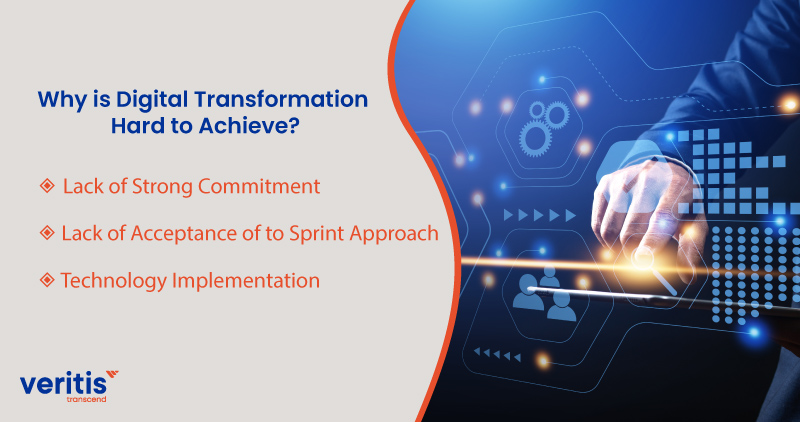
Why is Digital Transformation Hard to Achieve?
“Digital Transformation” refers to a fundamentally new approach to executing an essential organizational task. It does not simply mean adopting new software, digital technologies, or more automated, efficient procedures that replace conventional business practices and processes.
While undertaking a digital business transformation program, organizations must consider factors such as employee reactions to the change, its impact on customer relations, costs, alignment with corporate objectives, and more. Digital transformations enable businesses to move into the future, position themselves to compete, and expand into new markets.
However, all of that is more said than done; according to statistics on digital transformation solutions, only 16% of teams believe their company’s digital transformation efforts have enhanced their performance or are sustainable, and 70% of all digital transformation programs fail due to employee resistance and a lack of management support.
Fatigue from ‘continuous change’ is a key reason for such failures. Here, we will look into three primary reasons that can lead to a digital transformation company’s failure:
1) Lack of Strong Commitment
Understanding and accepting a concept or vision differ entirely from committing to its implementation and supporting its journey.
Successfully implementing a digital transformation framework in the first phase, then discontinuing it in subsequent phases, can disrupt the plan’s continuity. Remember! Digital business transformation initiatives entail significant change, not a single step.
It should apply enterprise wide and across cross functional teams. Every stakeholder involved should consider the personal ownership of the initiative being rolled out and be able to support the case. There needs to be an acceptable collective vision across the chain, from the top level executives to every stakeholder associated with the process.
Following this level of acceptance, start slowly and let every stakeholder in the process become accustomed to it; once they are, the pace naturally picks up.
2) Lack of Acceptance of the Sprint Approach
Implementing any initiative requires assessing the journey in terms of budget, possible risks, and measurable results. In traditional business models like the waterfall model, firms create a vision, build a supporting business case, allocate a budget, and implement it as a long term project. This approach has a lot of scope for failure, as you don’t know what might happen next minute.
That’s where the sprint approach plays crucial!
Planning a digital transformation journey requires a sprint approach. A vast project is divided into multiple short term ones with short term objectives and measurable results per the planned vision and strategy. This approach helps you execute the plans stepwise through phase wise budget allocation per sprint. Long term plans with limited knowledge of possible hurdles or unexpected failures can make your journey harder.
3) Technology Implementation
Technology implementation is a strategic step in the digital transformation journey. However, rushing for early implementation may not always yield the desired results.
Consider a complex technology implementation process to build new capabilities. This may require a comprehensive IT modernization process, which can consume more time, budget, and resources. After so many efforts, you might often receive only a little value that doesn’t match the efforts. Ultimately, you might feel this process wouldn’t require this much technology intervention.
Here is another instance of a technology implementation with a new operating change. In this case, handling operating culture and change in cultural mindset can become hurdles as the implementation progresses. This can lead to abruption with only a few assets upgraded, and increase stakeholders’ resistance to future technology enabled improvements.
Let’s take another instance of technology implementation without awareness of its future implications for the existing process. While the initial phases may seem exceptionally promising, what if they require a change in operating model and business to achieve the desired results? This can also lead to distress!
All three cases conclude that the implementation of technology in the digital transformation model journey is not about ‘being first’ and should ideally be a strategic approach. It shouldn’t mean a rapid replacement of legacy systems and apps; instead, it should be a stepwise process with a sprint approach, following a detailed understanding of core business objectives.
Phases of the Digital Transformation Journey
Digital transformation is an ongoing process rather than a single event, constantly adapting to shifting business demands and technological progress. For the best results, organizations should approach it as a series of strategic phases.
1) Awareness: Recognizing the need for change. This stage involves analyzing current challenges, identifying customer demands, and aligning transformation goals with long term strategy.
2) Strategy: Building the roadmap. Here, leadership takes the reins, secures executive sponsorship, defines business outcomes, and sets SMART goals to guide implementation.
3) Execution: Turning plans into action. Technology adoption, process redesign, and agile delivery methods, which involve iterative development and frequent feedback, are deployed to ensure measurable results.
4) Sustainment: Ensuring long term success. This crucial phase includes embedding new practices into company culture, monitoring KPIs, gathering feedback, and continuously improving systems and workflows.
By following these structured phases, enterprises ensure that their digital transformation journey is not just about overcoming hurdles but about achieving sustainable growth and resilience.
Useful link: Business Transformation Vs. Digital Transformation: A Thin Line of Difference!
How to Solve the Problems Affecting Digital Transformation?
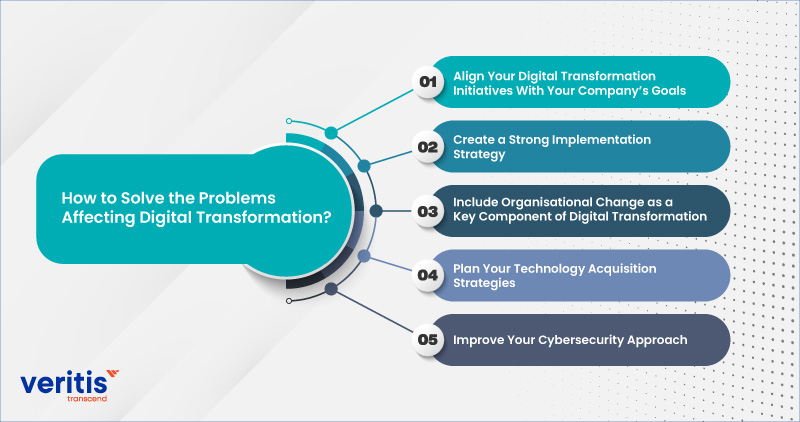
The obstacles to digital transformation consulting services can be overwhelming, and some are beyond your control. However, you may take action to overcome obstacles and guide your company through a seamless transition to a digital future. Here are five suggestions for getting beyond obstacles.
1) Align Your Digital Transformation Initiatives With Your Company’s Goals
Aligning your initiatives with business outcomes is one of the first steps toward a successful digital transformation framework change. Set specified targets as the top priority for your digital investments. Use outcome driven criteria when choosing where to spend your money and which initiatives to prioritize. Develop a unified vision aligned with your corporate objectives.
2) Create a Strong Implementation Strategy
A robust digital transformation strategy must support your vision for the future of digital technology. Your technology strategy should support your efforts and ensure consistency throughout. To promote long term adoption, create an integration strategy for scalable systems in corporate architecture, cybersecurity, cloud services, analytics, and other areas.
3) Include Organisational Change as a Key Component of Digital Transformation
Despite its challenges, organizational change is essential for transformational growth. This entails a change in the company’s culture and mentality.
First, cultural barriers to digital transformation trends must be evaluated. Then implement a change management plan based on a thorough, coherent roadmap. Always remember that change must begin at the top. If you want to reduce employee resistance, you must do this.
4) Plan Your Technology Acquisition Strategies
Internal budget management is possible, but you often need greater control over resource constraints. Plan a clear technology procurement strategy to lessen bottlenecks during your transition.
Perform a technology evaluation to review your current technology and identify new solutions essential to the shift in digital transformation trends. Consider alternate options wherever feasible. Consider incorporating tech resource shortages into your risk management strategy to mitigate potential hazards.
5) Improve Your Cybersecurity Approach
Continuous enhancement of cybersecurity capabilities is necessary to achieve secure digital business transformation. Ensure your proactive monitoring plan addresses problems before they become high risk breaches. Implement patch management to find vulnerabilities when utilizing third party programs.
Your cybersecurity strategy must be a core component of Digital Transformation, embedded within the broader transformation program. While implementing practical security measures requires a reasonable budget, the cost of unmanaged risk is far higher. As a result, enterprises must establish robust cybersecurity and risk management frameworks from the outset.
The Human Side of Digital Transformation
While technology plays a central role, the actual driver of success in any digital transformation journey is people. Studies consistently show that projects with strong change management are up to 6 times more likely to succeed than those without it.
Key human and leadership factors include:
- Executive Sponsorship: Visible leadership commitment is the #1 predictor of transformation success. Leaders must actively champion change, communicate priorities, and allocate resources.
- Workforce Readiness: Employees must be prepared through role specific training, reskilling programs, and clear communication on how the transformation impacts their daily work.
- Culture and Communication: Two way communication builds trust. When employees feel engaged and empowered, adoption rates soar, and resistance decreases.
- Change Management Frameworks: Models such as Prosci’s ADKAR provide a framework for guiding individuals through the Awareness, Desire, Knowledge, Ability, and Reinforcement stages.
Focusing on people and organizational culture enables businesses to connect technology with desired outcomes, ensuring their transformation efforts are both lasting and effective.
How to Succeed in Your Digital Transformation Journey
Enterprises often struggle because they treat transformation as a technology upgrade rather than a strategic, people enabled shift. To succeed, organizations should adopt a practical, structured approach:
1) Conduct a Readiness Assessment: Evaluate culture, leadership alignment, and skills gaps to ensure a successful launch of digital transformation initiatives.
2) Build a Roadmap with SMART Goals: The foundation of your digital transformation journey lies in setting clear objectives that are Specific, Measurable, Achievable, Relevant, and Time bound. These SMART Goals will guide your transformation efforts and keep them on track.
3) Start Small with Pilots: One of the most effective ways to test new technologies or processes is through pilot programs. This approach allows you to gather feedback, measure impact, and scale gradually, ensuring a more controlled and successful digital transformation journey.
4) Enable Change with Training and Support: Provide role based training, in app guidance, and ongoing coaching to ensure adoption.
5) Embed Continuous Improvement: By collecting feedback, measuring KPIs, and refining strategies through feedback loops, you can continually enhance your digital transformation journey, fostering a sense of optimism about the potential for ongoing success.
Real World Example:
A global manufacturer adopted agile sprints to phase its digital transformation journey. Breaking projects into manageable steps reduced delays by 30% and increased stakeholder buy in. Similarly, a financial services firm introduced in app training during a core system upgrade, resulting in a 40% reduction in support tickets.
To simplify execution and ensure alignment between people, processes, and technology at every stage, organizations can use a Digital Transformation Readiness Checklist. This tool will instill confidence in your ability to stay on track throughout your transformation journey.
Case Study: Overcoming Hurdles in Manufacturing With Digital Transformation
- Objective:
Navigate the challenges of digital transformation in manufacturing by implementing technologies that enhance efficiency and production quality. - Challenge:
The client faced obstacles such as inefficient processes, poor data visibility, and difficulties in scaling operations to meet increasing demand. - Solution:
Veritis deployed advanced digital technologies, including automation, data analytics, and IoT, to optimize operations, improve decision making, and streamline production. - Outcome:
- Increased operational efficiency through automation
- Better decision making with real time data insights
- Scalable solutions to support future growth
- Impact:
The client overcame transformation hurdles, boosting productivity and positioning itself as a more agile and competitive player in the manufacturing sector.
Read the Full Case Study: Leveraging Digital Technologies for Manufacturing Success
The Conclusion
These three hurdles offer valuable insights into understanding the potential failures in a successful digital transformation journey. So, add these to your checklist for the proper implementation!
Digital transformation challenges take time to manage. Therefore, organizations need to build a solid ecosystem to implement change effectively. Before starting your digital transformation, create a plan to remove barriers to DX to ensure effective digitization.
We must eliminate the barriers to change and change the culture and organizational structure to resolve these issues. We must also implement a flexible architecture that can support a range of digital technologies. Ultimately, we must identify the best digital transformation partner, such as Veritis, a Stevie Award winner, to help us build a scalable business.