Table of contents
Global cloud spending exceeded $905 billion in 2026, yet an estimated 30% of AWS expenditure remains wasted due to underutilized resources, overprovisioned instances, and idle assets. For top executives and enterprise decision makers, this represents not merely an IT concern but a strategic imperative demanding immediate attention. The organizations that master AWS cost optimization tools achieve 25 to 45% reductions in cloud expenditure while simultaneously improving performance and operational resilience.
This comprehensive guide examines the most effective AWS cloud cost optimization tools available in 2026, demonstrating how enterprises achieve substantial AWS cloud cost reductions through strategic implementation following established AWS cost optimization best practices.
2026 Cloud Cost Ecosystem: By the Numbers
The urgency for implementing AWS cost optimization tools becomes clear when examining the current enterprise cloud ecosystem. The data reveals both the magnitude of the challenge and the substantial opportunity for organizations that act decisively. Below is a comprehensive AWS cost optimization checklist of key metrics:
| Metric | 2026 Statistics |
| Global Cloud Spending | $905+ billion (2026), projected $2904B+ by 2034 |
| Wasted AWS Spend | 30% of AWS expenditure was still wasted in 2026 |
| Potential Savings with Optimization | 25 to 45% reduction with structured programs |
| AWS Market Share | 32% global market leadership maintained |
| Enterprises Using Cost Tools | 79% of FinOps leaders use automated tools |
| AI/ML in Cost Optimization | 52% implementing AI driven cost management |
Talk To Our Cloud Computing Consultant
Why AWS Costs Spiral Out of Control?
AWS offers over 200 fully featured services, creating unprecedented flexibility that paradoxically becomes a liability without proper governance. Understanding the root causes of cost inflation is essential to developing an effective AWS cost reduction strategy. Our analysis reveals that organizations without proper AWS cloud cost optimization tools consistently face challenges that prevent meaningful AWS cloud cost reductions:
Primary Drivers of AWS Cost Inflation
1) Underutilized Compute Instances
Studies indicate that 40% of EC2 instances run at less than 40% utilization. AWS cloud cost reductions of up to 65% are achievable through systematic right sizing with AWS cloud optimization tools.
2) Idle Resources
EBS volumes, snapshots, and load balancers continue to incur charges even when unused. Organizations without AWS cost optimization tools typically discover 15 to 25% of storage spend supports orphaned resources.
3) Missed Savings Opportunities
Spot Instances offer up to 90% discount, while reserved instances provide up to 72% savings. Enterprises using AWS cloud optimization tools effectively capture only 35% of potential savings.
4) Savings Plans Underutilization
AWS savings plans can reduce costs by up to 72%, yet only 38% of enterprises have implemented commitment strategies. AWS cost reduction initiatives focused on a commitment to deliver 20 to 40% immediate savings.
5) Inefficient Auto Scaling:
Poorly configured auto scaling leads to over provisioning. AWS cloud cost optimization tools with predictive scaling address this by aligning capacity with demand.
Useful link: Top 15 AWS Machine Learning Tools in the Cloud
What are the 5 AWS Design Guidelines That Aim to Reduce Costs?
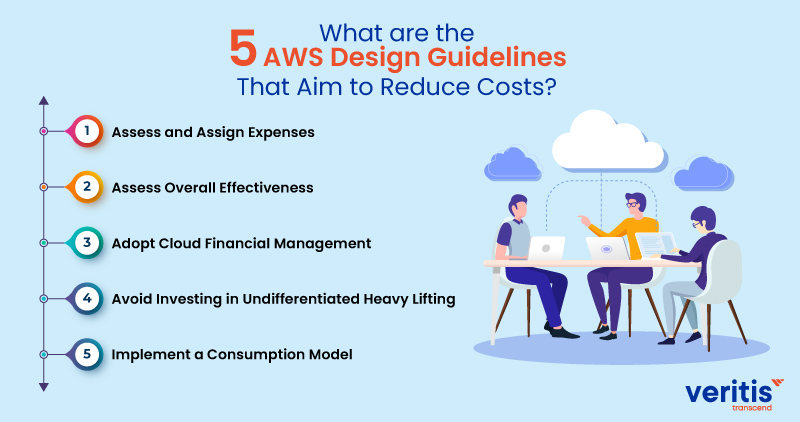
The AWS Well Architected Framework provides foundational principles that align with AWS cost optimization best practices. These guidelines serve as the cornerstone for enterprises seeking sustainable AWS cost reduction through the proper implementation of AWS cloud optimization tools.
1) Implement Cloud Financial Management
Cloud financial management accelerates business value through AWS cloud cost optimization tools that provide real time visibility. Organizations investing in FinOps achieve 25 to 35% faster time to value and significant AWS cloud cost reductions.
2) Adopt a Consumption Based Model
Pay only for the compute resources required. Stopping non production resources outside business hours can reduce AWS cloud costs by up to 75%. Organizations implementing scheduled shutdown policies report average savings of $2.4M annually.
3) Measure Overall Efficiency
Measure the business output of workloads against total costs. AWS cost optimization tools provide granular metrics that enable executives to understand cost per transaction and cost per customer.
4) Avoid Undifferentiated Heavy Lifting
AWS managed services reduce operational overhead. Leveraging AWS cloud optimization tools like RDS, EKS, and Lambda eliminates the cost of maintaining operating systems, translating to 40 to 60% operational overhead reduction.
5) Analyse and Attribute Costs
Cloud environments enable precise identification of cost and usage by workload. This granularity supports ROI measurement and facilitates AWS cost reduction decisions based on business impact. Following a structured AWS cost optimization checklist ensures comprehensive cost attribution.
Useful link: Managing Kubernetes Applications Through Terraform and AWS EKS
The Five Key Drivers of AWS Cost Optimization

Implementing an effective AWS cost optimization checklist requires systematic attention to five foundational areas using AWS cloud cost optimization tools. Each pillar contributes to meaningful AWS cloud cost reductions:
1) Right Sizing Resources
Match instance types and sizes to workload requirements precisely. AWS cost optimization tools like AWS Compute Optimizer use ML to analyse historical utilization. Organizations that follow systematic right sizing achieve 20 to 40% reductions in compute costs within 90 days.
2) Optimize Storage Tiers
AWS offers multiple storage tiers with varying performance and price points. AWS cloud cost optimization tools, such as S3 Intelligent Tiering, automate this process by moving data between access tiers based on usage patterns.
3) Leverage Appropriate Pricing Models
AWS provides multiple pricing models, including On Demand, Reserved Instances, Savings Plans, and Spot Instances. Aligning workload characteristics with optimal pricing models is fundamental to AWS cost optimization best practices. These decisions should be part of your comprehensive AWS cost optimization checklist.
4) Enhance Elasticity
Cloud resources can scale dynamically with demand. AWS cloud optimization tools enable automatic provisioning based on real time metrics. Organizations implementing elasticity strategies report 35 to 50% improvements in utilization.
5) Track, Tag, and Optimize Continuously
Given the dynamic nature of cloud environments, establishing comprehensive monitoring is essential for sustained AWS cost reduction. Using AWS cloud optimization tools for tagging and tracking helps maintain accountability.
Useful link: Securing the Future: AI Automation Tools in Cybersecurity
Strategic Benefits of AWS Cost Optimization Tools

The business case for AWS cost optimization tools extends far beyond simple cost cutting. When implemented as part of a comprehensive AWS cost optimization best practices, these tools deliver measurable improvements and drive meaningful AWS cost reduction:
1) Cost Visibility and Accountability
AWS cloud cost optimization tools provide granular insights into spending patterns. Organizations report 85% improvement in cost attribution accuracy within 60 days.
2) Resource Right Sizing Automation
Advanced AWS cloud optimization tools automate the right sizing process. ML powered recommendations typically identify 15 to 25% additional savings opportunities.
3) Reserved Instance and Savings Plan Optimization
Effective management of commitment based discounts can yield AWS cloud cost reductions of 30 to 72% compared to on demand pricing. AWS cost optimization tools analyse usage patterns to recommend optimal commitment levels.
4) Proactive Anomaly Detection
Real time monitoring prevents cost overruns before they impact the bottom line. AWS cost optimization best practices include configuring budget alerts and anomaly detection. Organizations with mature detection catch 90% of cost spikes within 24 hours.
5) Financial Intelligence and Forecasting
AWS cloud cost optimization tools leverage AI powered forecasting to transform cost data into strategic intelligence. With Cost Explorer’s 18 month predictions and the new cost efficiency score, executives gain proactive budget visibility. Organizations report 60% improvement in budget accuracy and 40% faster planning cycles.
This transforms your AWS cost optimization checklist into a strategic asset; enterprises with mature forecasting achieve a 3 week payback on investments and reduce budget variance from 35% to under 10%.
Useful link: What is Generative AI: An Ultimate Guide to Amazon Generative AI Tools
AWS Cost Optimization Best Practices
1) Identify Amazon EC2 Instances with Low Usage
The Resource Optimization report from Amazon Cost Explorer displays EC2 instances that are not being used or are being used inefficiently. Stopping or changing these instances to a reduced instance size will reduce costs. Amazon Operations Conductor’s automated instance scheduling and the AWS Instance Scheduler’s automatic instance termination are further options.
The Amazon Compute Optimizer provides further suggestions for EC2 instances. For instance, it could advise downsizing instances among instance families or switching to more powerful instances to avoid performance snags. It may also suggest how best to use Auto-Scaling groups.
2) Sell or Use Unused Reserved Instances
Reserved Instances on Amazon can drastically save prices, but only if you utilize them. Therefore, using unused reservations is crucial to protect your investment.
When a reserved instance becomes available, you can utilize it for a new application or an existing one currently using more expensive on-demand instances. However, should this not be the case, you can sell your RIs on the Reserved Instance Marketplace.
3) Use Amazon EC2 Spot Instances to Save AWS Costs
Spot Instances are a crucial component of the AWS cost-reduction plan and can save EC2 expenses by up to 90% if your workload is fault-tolerant. Spot instances may terminate with two minutes’ notice is the main restriction. Typical workloads include big data, containerized workloads, continuous integration/delivery (CI/CD), web servers, and development/testing.
Using Amazon’s Spot Fleet functionality, you may run spot and on-demand instances in the same Auto Scaling group while reserving some on-demand instances that cannot be interrupted for crucial components.
Useful link: 8 IT Cost Optimization Tactics for CIOs
Top 7 AWS Cost Optimization Tools for 2026
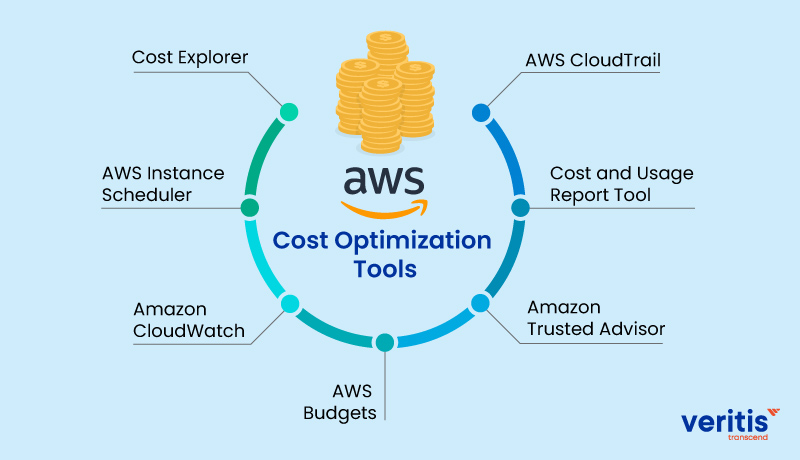
AWS has significantly expanded its native AWS cost optimization tools portfolio following reinvent 2026, introducing AI powered capabilities and a unified optimization hub. These AWS cloud cost optimization tools represent the most effective options for implementing your AWS cost optimization checklist and achieving substantial AWS cloud cost reductions:
1) AWS Cost Explorer
AWS Cost Explorer remains the foundational tool for cost visibility, now enhanced with AI powered forecasting capabilities announced at Re: Invent 2026.
| Metric | Value |
| Forecasting Horizon | 18 months |
| Historical Data Analysis | Up to 36 months |
| Savings Plans Recommendations | Up to 40% additional discounts identified |
| Data Refresh Rate | Daily updates |
Key Features:
- AI powered cost forecasting with natural language explanations
- Savings Plans and Reserved Instance purchase recommendations
- Reserved Instance utilization and coverage reports
- Filtering by service, linked account, tag, and region
- Custom date ranges and hourly/daily/monthly granularity
Pros and Cons:
| Pros | Cons |
| Free with all AWS accounts | Limited customization for complex scenarios |
| Intuitive visual interface | No real time alerting capabilities |
| 18 month AI forecasting | Manual analysis required for deep insights |
| Integrates with all AWS services | Third party integrations require additional setup |
Business Impact:
Organizations using Cost Explorer’s AI forecasting report 85% improvement in budget accuracy. Essential for any AWS cost optimization checklist.
2) AWS Instance Scheduler
The Amazon instance scheduler utility assists you in automatically halting Amazon Relational Database Service (RDS) and Amazon EC2 instances using information from Cost Explorer. As a result, Amazon Web Services EC2 can be scaled and scheduled according to your anticipated usage pattern, demands, and requirements.
3) Amazon CloudWatch
CloudWatch assists you in setting alarms for particular resource levels by considering a range of metrics from your Amazon services.
For instance, you could create an alarm to alert you if the percentage of your EC2 instances drops below 40%. Then, you can quickly assess instance underutilization after the alarm alerts you, investigate it, and proportionally resize or combine the workloads.
4) AWS Budgets
You can establish the budget for particular Amazon services using AWS Budgets. Additionally, the budget can be linked to specific data that boosts efficacy. Finally, you can receive emails or messages from the Simple Notification Service (SNS) to notify you of AWS Budget occurrences.
Usage Example: You can set up an overall budget for the entire account or a specific resource, like using numerous Amazon EC2 instances or the Amazon CloudFront CDN.
5) Amazon Trusted Advisor
Amazon Trusted Advisor provides various functionalities, including enhancing security and performance, lowering overall costs, and optimizing your AWS infrastructure.
This examines your Amazon setup and offers best practice advice on service restrictions, performance, cost-cutting, security, and fault tolerance.
Automatic Recommendations for Cost-Saving
- Optimizing EC2 reserved instances
- EC2 instances are only partially used
- Elastic load balancers that are idle
- Underused EBS volumes
- Elastic IP addresses without any connections
- Database instances on Amazon RDS that are not in use
6) Cost and Usage Report Tool
The Cost Usage and Report tool for Amazon Web Services (AWS) provides a detailed report of your AWS cloud cost optimization, consumption, service pricing, and other information on an hourly, daily, or monthly basis.
7) AWS CloudTrail
While on the go, you can manage, track, and log reports from your Amazon Web Service using CloudTrail. This tool informs you of any unusual spikes in activity that can raise costs and enable you to take appropriate action.
Case Study: Cloud Cost Optimization Through Automation and Orchestration
Veritis partnered with a prominent airline client to implement infrastructure automation and orchestration across their enterprise public cloud environment. One of the primary objectives was to mitigate rising cloud costs while maintaining optimal performance and reliability. By leveraging automation, right-sizing resources, and implementing cost governance strategies in line with AWS best practices, Veritis helped the client gain visibility into usage patterns and eliminate waste. The initiative, complemented by several AWS cost optimization tools, provided the client with a sense of continuous cost control and operational efficiency, instilling confidence and control over their cloud costs.
This case serves as a testament to the effectiveness of integrating AWS native tools with automation strategies, resulting in significant cost savings in real-world scenarios.
Read the complete case study: Infrastructure Automation and Orchestration for Airlines Client.
Conclusion
There are numerous options for AWS cost optimization, and selecting one can be challenging. While waste reduction and purchase strategies, such as reserved instances, have traditionally been the focus of cost optimization, many progressive businesses now emphasize engineering enablement and architectural optimization more.
Businesses understand that cost optimization entails giving engineering teams the cost intelligence they need to make cost-effective development decisions and lowering the AWS pricing model.
Veritis is your certified cloud consultation partner on AWS, Azure, and GCP, with over 20 years of industry-leading experience and a perfect client satisfaction history.
We are a Proud Stevie Award winner with unrivaled experience and a relentless passion for top-of-the-line quality. We maximize the value of the cloud for you through certified cloud experts who not only manage your cloud but also deliver the insights to create robust savings and operational efficiencies. Be it the transition to complex cloud environments or simply to cut unnecessary costs, Veritis is your smart strategic edge.
Schedule A Call with Cloud Expert
Additional Resources: